

Skip to main content

WiP - Paolo Santorio / Knowledge and possibility
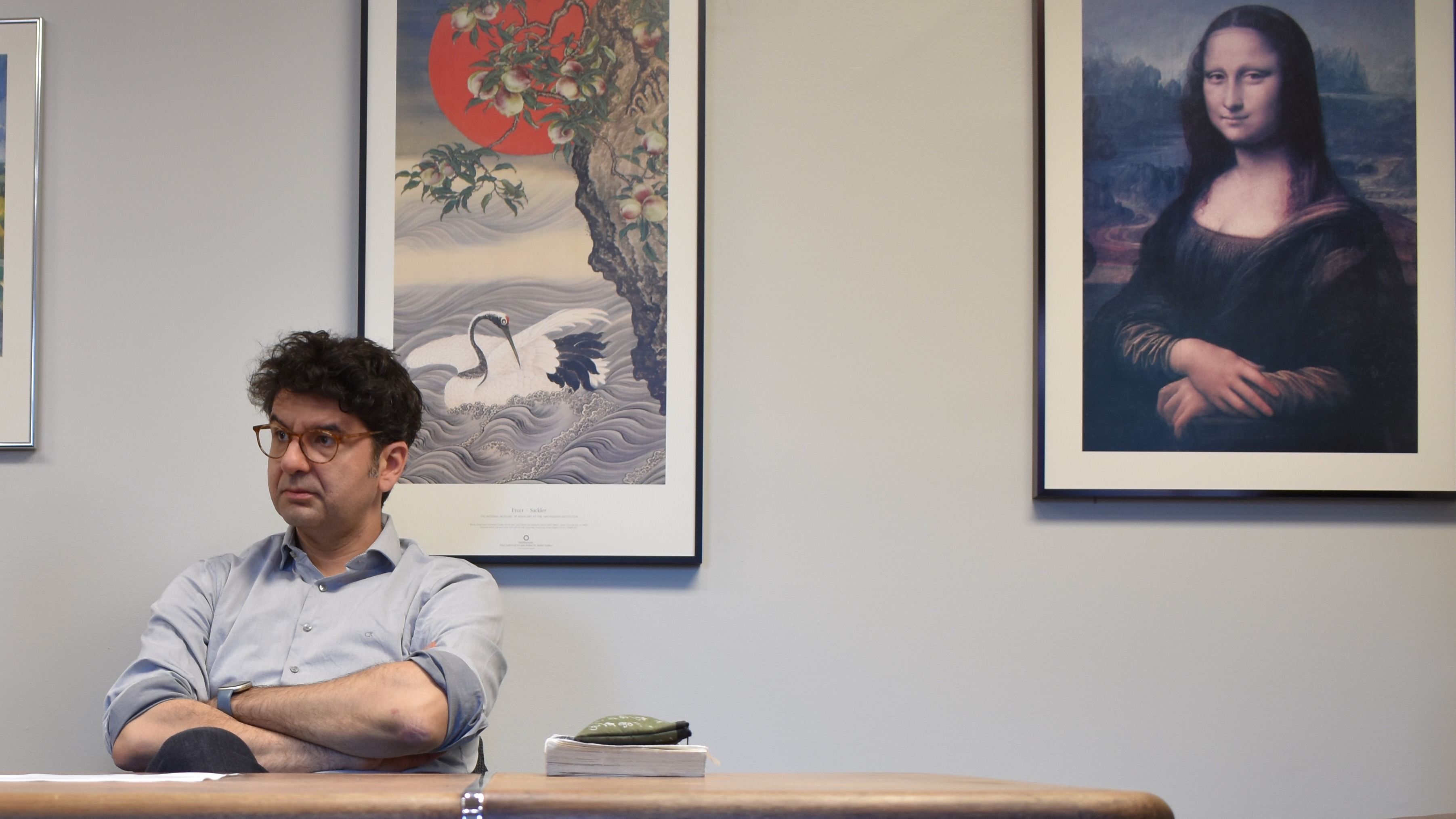
A man with glasses, sitting with arms folded, at a desk in front of a poster of the Mona Lisa.

WiP - Paolo Santorio / Knowledge and possibility

Philosophy Wednesday, September 23, 2026 1:00 pm - 2:00 pm Skinner Building, 1116

September 23, Paolo leads our weekly Work-in-Progress meeting with new thoughts on how to have a plausible form of fallibilism. 


According to fallibilists about empirical knowledge, we can know a proposition p even if we are not in a position to rule out every non-p possibility. Fallibilism is an attractive position, but it is subject to formidable challenges. For example, David Lewis's version of fallibilism entails that we can know some empirical propositions cost-free, without doing any epistemic work. I argue that a better version of fallibilism results from adopting a new conception of epistemic possibilities. Standardly, epistemic possibilities are taken to be possible worlds. I suggest that we take possibilities to be coarse-grained entities, which need not settle every proposition. This can be used to build a new version of fallibilism, on which knowledge is relativized to a resolution of logical space. This picture blocks the problem of cost-free knowledge, along with several others. The price is that we need to restrict the principle that knowledge is closed under (single-premise) entailment; but this restriction, I argue, is justified and in fact desirable. 

Add to Calendar 09/23/26 13:00:00 09/23/26 14:00:00 America/New_York WiP - Paolo Santorio / Knowledge and possibility

September 23, Paolo leads our weekly Work-in-Progress meeting with new thoughts on how to have a plausible form of fallibilism. 


According to fallibilists about empirical knowledge, we can know a proposition p even if we are not in a position to rule out every non-p possibility. Fallibilism is an attractive position, but it is subject to formidable challenges. For example, David Lewis's version of fallibilism entails that we can know some empirical propositions cost-free, without doing any epistemic work. I argue that a better version of fallibilism results from adopting a new conception of epistemic possibilities. Standardly, epistemic possibilities are taken to be possible worlds. I suggest that we take possibilities to be coarse-grained entities, which need not settle every proposition. This can be used to build a new version of fallibilism, on which knowledge is relativized to a resolution of logical space. This picture blocks the problem of cost-free knowledge, along with several others. The price is that we need to restrict the principle that knowledge is closed under (single-premise) entailment; but this restriction, I argue, is justified and in fact desirable. 

Skinner Building false