

Meaning Meeting - Elizabeth Swanson / Desirability and attitude verb learning
Meaning Meeting - Elizabeth Swanson / Desirability and attitude verb learning
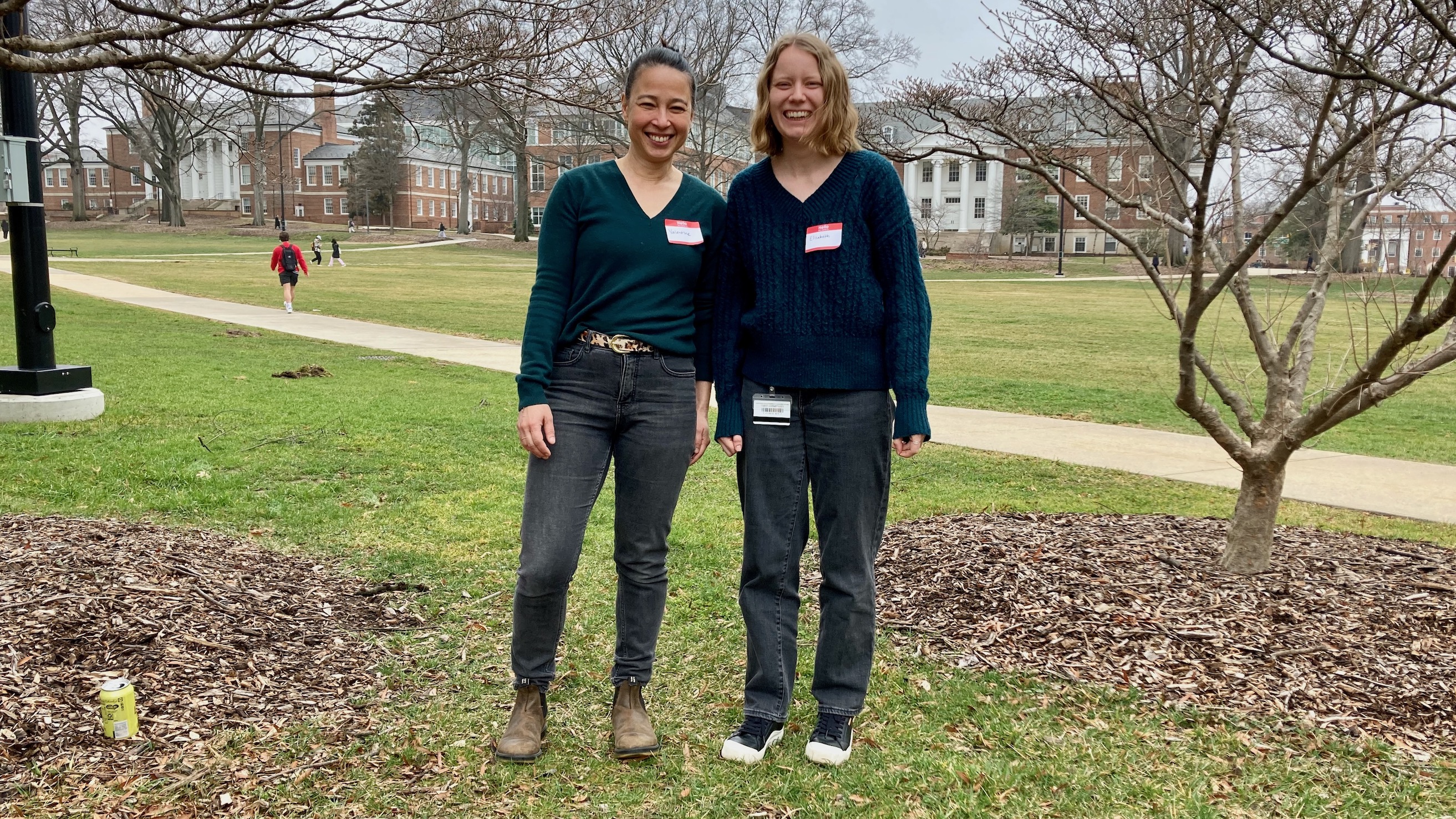
Tuesday April 21, Elizabeth leads the Meaning Meeting, workshopping a plan for new experiments with adults, looking at which cues may be useful to learners in distinguishing different types of attitude verbs. The plan is described below.
I'm seeking feedback on an experiment I’m planning to run with adults, looking at which cues may be useful to learners in distinguishing different types of attitude verbs. Children differentiate representational attitudes (belief verbs) from preferential attitudes (desire verbs) by age 3 (e.g., Perner et al., 2003). How do they do so? Previous work has focused on the potential role of syntactic cues in attitude verb complements (Hacquard & Lidz, 2019; 2022) and of differences in temporal orientation (Jesus et al., in press). Early experiments with adults cast doubt on the idea that lexical/semantic cues would be much use in identifying attitude verbs (Gillette et al., 1999). However, in this experiment, we will revisit the role of semantic information, asking whether there are differences in desirability between the complements of preferential and representational attitudes. In short, are desire verb complements just more desirable? (We suspect the story will not be this simple.) I will discuss possible implications for different accounts of attitude verb learning.